

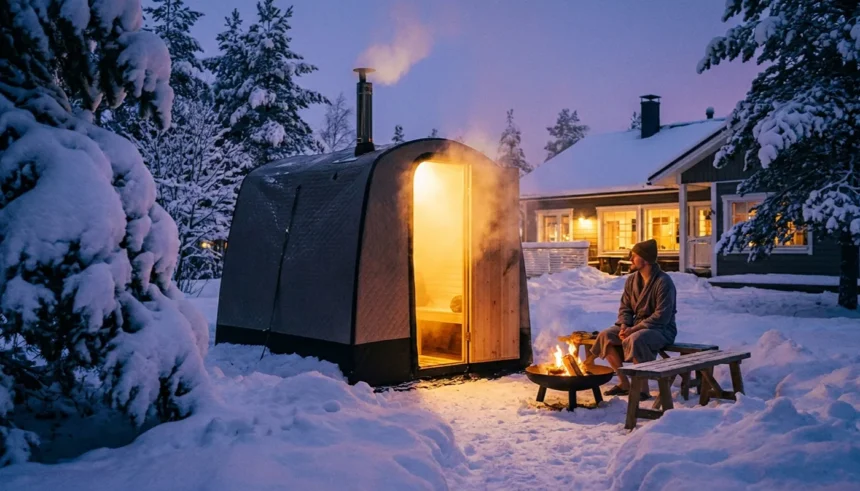
Using a portable sauna in winter to warm you up during cold evenings sounds rather comfortable. But if you are new to portable saunas, you might be wondering if doing that is even possible.
Is it safe to do so, or will the cold winter temperatures prevent your sauna from working properly?
- Can You Use a Portable Sauna in Winter?
- How Cold Weather Affects Sauna Performance
- How to Make Your Sauna Perform Better in Winter Conditions
- Steam vs. Infrared: How Different Portable Sauna Types Work in Winter Weather?
- Outdoor Setup and Safety
- FAQ
- Can you use a portable sauna in winter?
- Does cold weather reduce sauna temperature?
- Can I put a portable sauna outside?
- Is an infrared sauna better than steam in winter?
- Is Winter Sauna Use Worth It?
It is perfectly natural to be curious and to want to test a portable sauna in different settings. In fact, many sauna owners want to enjoy their sessions year-round.
Sweating during the cold months could be good for the skin, and the warmth of a sauna is sure to bring a cozy feeling.
The short answer is that most portable saunas can, in fact, be used in cold weather. However, winter conditions can be tricky as they can affect heating performance. Your sauna might struggle a bit, become less efficient, or have longer warm-up times.
In this guide, we will explore how a winter climate impacts sauna performance, especially outdoors.
Can You Use a Portable Sauna in Winter?
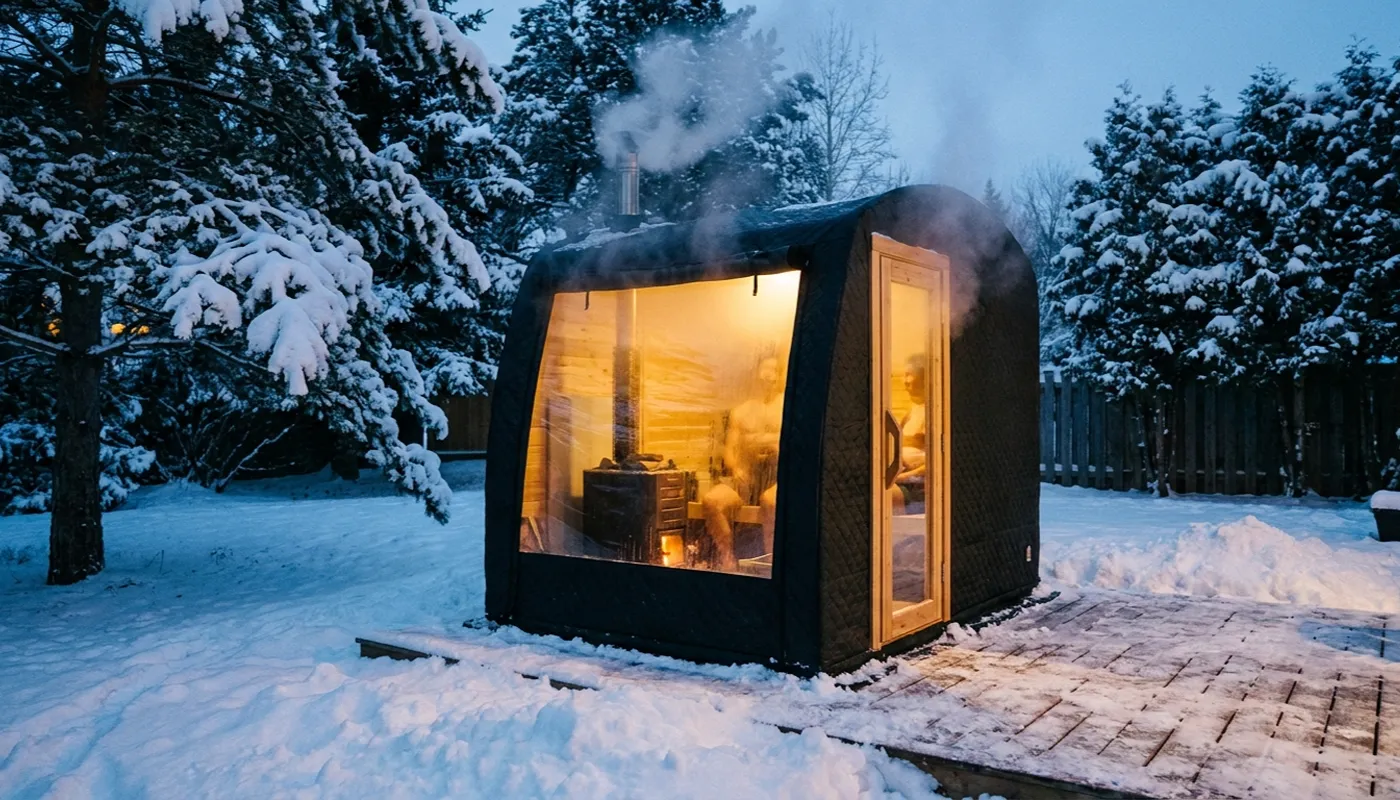
Let’s start by addressing the main problem: can you use a portable sauna in winter? The answer is yes – most portable saunas can operate during winter, in colder conditions. With that said, the outdoor temperatures can influence performance.
Your sauna experience may differ depending on whether you use a steam or an outdoor infrared sauna. Another thing to note is that portable saunas are mostly designed for indoor use. That goes for both infrared and steam models.
The goal was to create a device that can offer a sauna experience in small houses and apartments. With that said, a lot of users have reported that they successfully use them outside, too. It may be in their garage, covered patio, shed, and similar areas.
Regardless, you should be prepared for a somewhat different experience during outdoor use. Extreme cold could especially be a problem.
How Cold Weather Affects Sauna Performance
Since saunas were designed to be used indoors, they might behave differently outside. In a cold climate, the first thing you could expect is longer heat-up times.
One of the rules when using a portable sauna is to wait a bit after turning it on. First comes the pre-heat period, during which the interior gets heated.
This is the time when steam saunas get filled with vapor and infrared panels heat up. Usually it takes around 20 minutes for it to get ready.
But, if the surroundings are cold, like outside air in the winter, this could take longer. Some models might even struggle to reach their advertised temperature.
If the cold air saps the heat faster than the heating system can produce it, the sauna won’t reach those temperatures.
Using a sauna outside exposes it to the elements. Cold air and wind both affect it. They cause constant heat loss, especially if the surroundings are poorly insulated.
In short, portable saunas were made to operate in specific conditions. By changing those conditions, you can experience different performance. Remember that a portable sauna heater was not made to match traditional sauna strength.
How to Make Your Sauna Perform Better in Winter Conditions
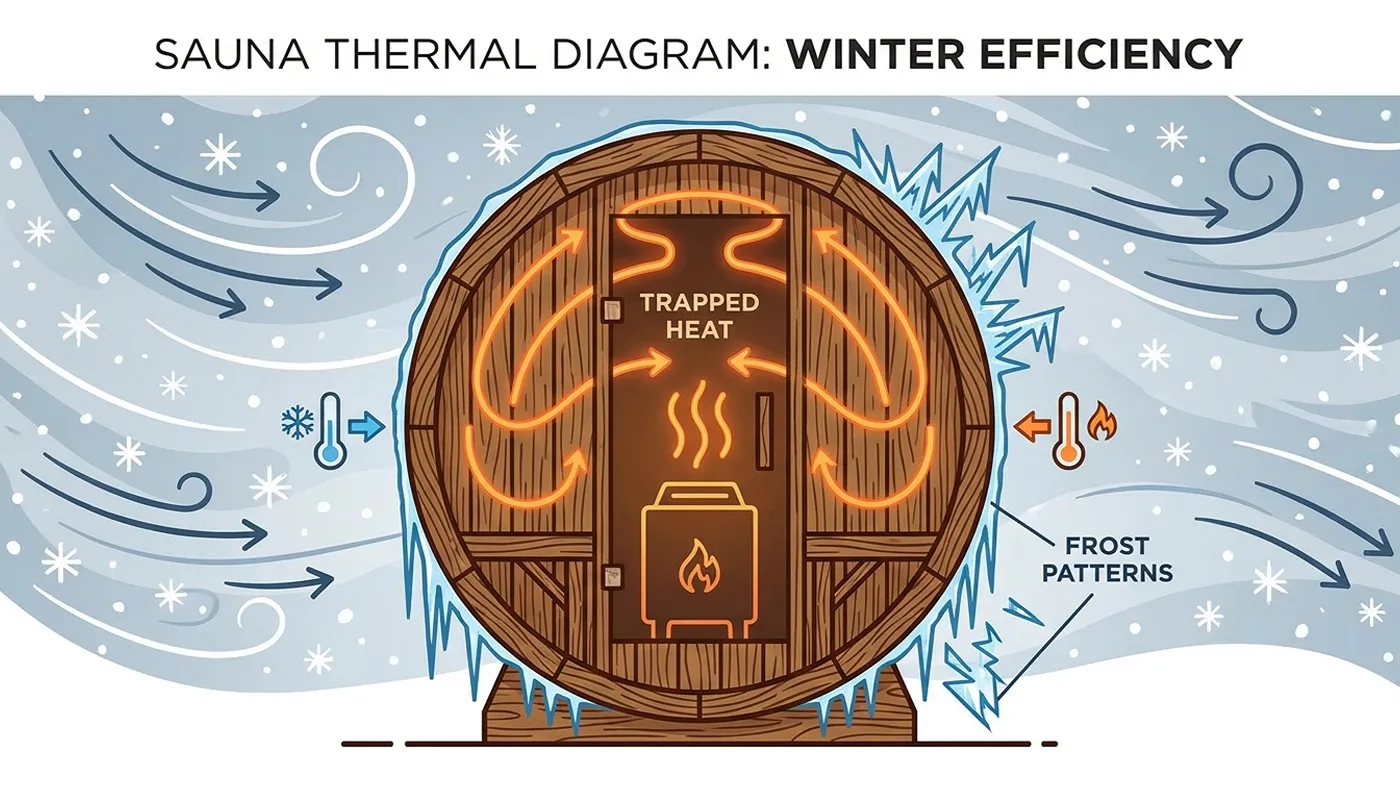
While cold temperatures will affect your sauna, you can do a few things to lessen the impact. The first thing to do is to address the main problem, which is exposure.
You can do this by choosing a relatively sheltered location. A garage, covered patio, shed, or even enclosed porch are all better than open space.
The main thing you want is to remove your sauna from the wind’s path. Wind can significantly increase heat loss, especially in cold conditions. Since an indoor sauna was not designed to battle the wind, it is especially vulnerable.
You can also give your sauna extra time to preheat. Heating up cold air takes longer, so it won’t be ready as quickly as it would inside. Give it half an hour or even 40 minutes to preheat, rather than just 20.
Apart from that, don’t open your sauna door too often. Obviously, you have to do it to get in, but after that, minimize its use. An open door or window on your sauna tent will quickly let the heat out and the cold in.
You should also remember that the cold comes from below, too. Cold ground can pull the heat away from the sauna.
Steam vs. Infrared: How Different Portable Sauna Types Work in Winter Weather?
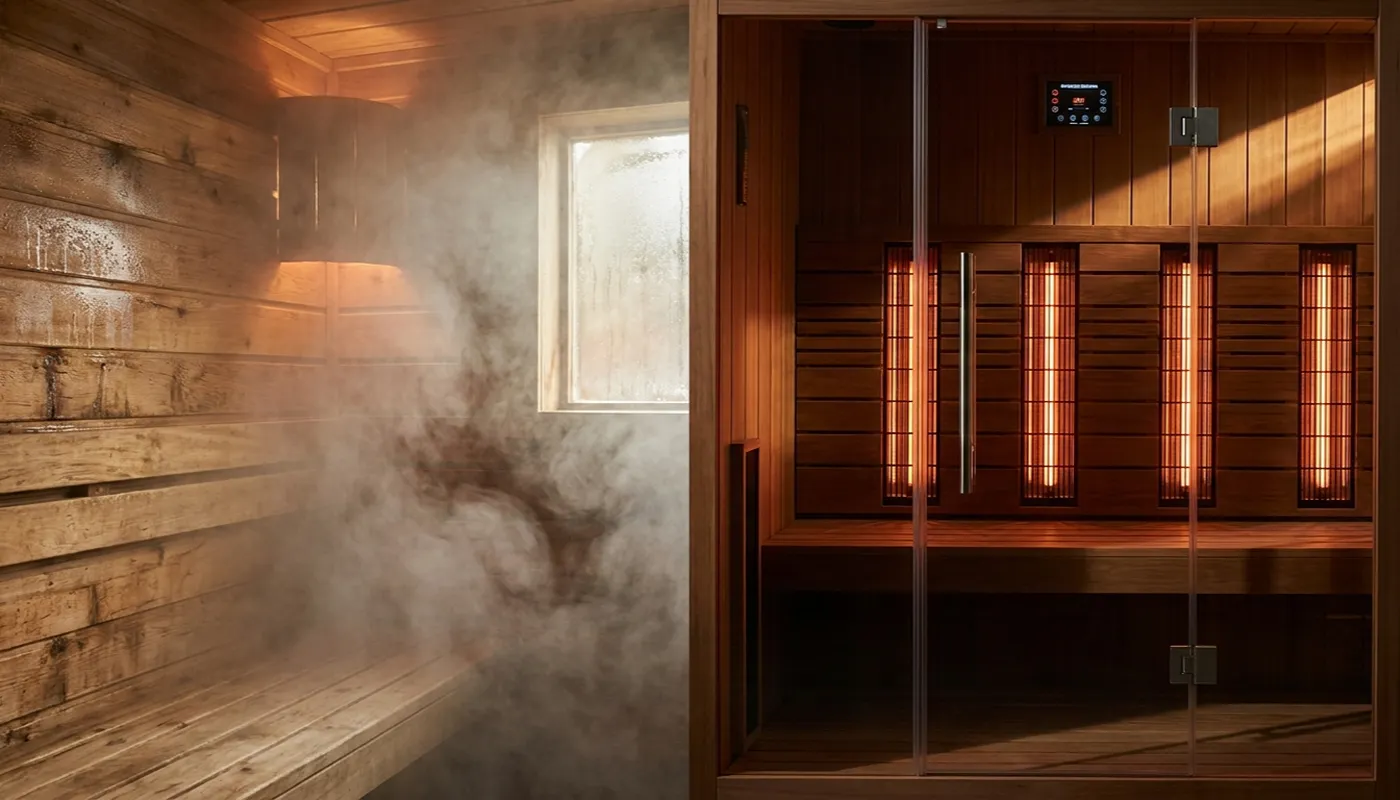
Steam and infrared saunas differ from a traditional sauna experience. However, they are also quite different from each other.
A steam sauna uses a steam generator to create vapor, which then enters the tent. It heats up the air surrounding the user and affects the user’s body along the way.
This usually provides a more intense experience and can feel hotter than it is.
Infrared saunas use infrared panels to target the body directly. The heat that the panels emit penetrates the skin and goes deeper in. However, the experience is much gentler and slower.
This can even feel rather underwhelming to some users. If you are used to traditional sauna therapy, you might find IR saunas somewhat lacking.
This can also provide quite a different experience during winter performance. Steam models may need longer preheating time, but they can provide a familiar experience. However, infrared models do not create steam. They target the body directly, usually at higher temperatures.
But steam models may feel hotter due to the higher intensity, even if they aren’t in terms of temperature.
Outdoor Setup and Safety
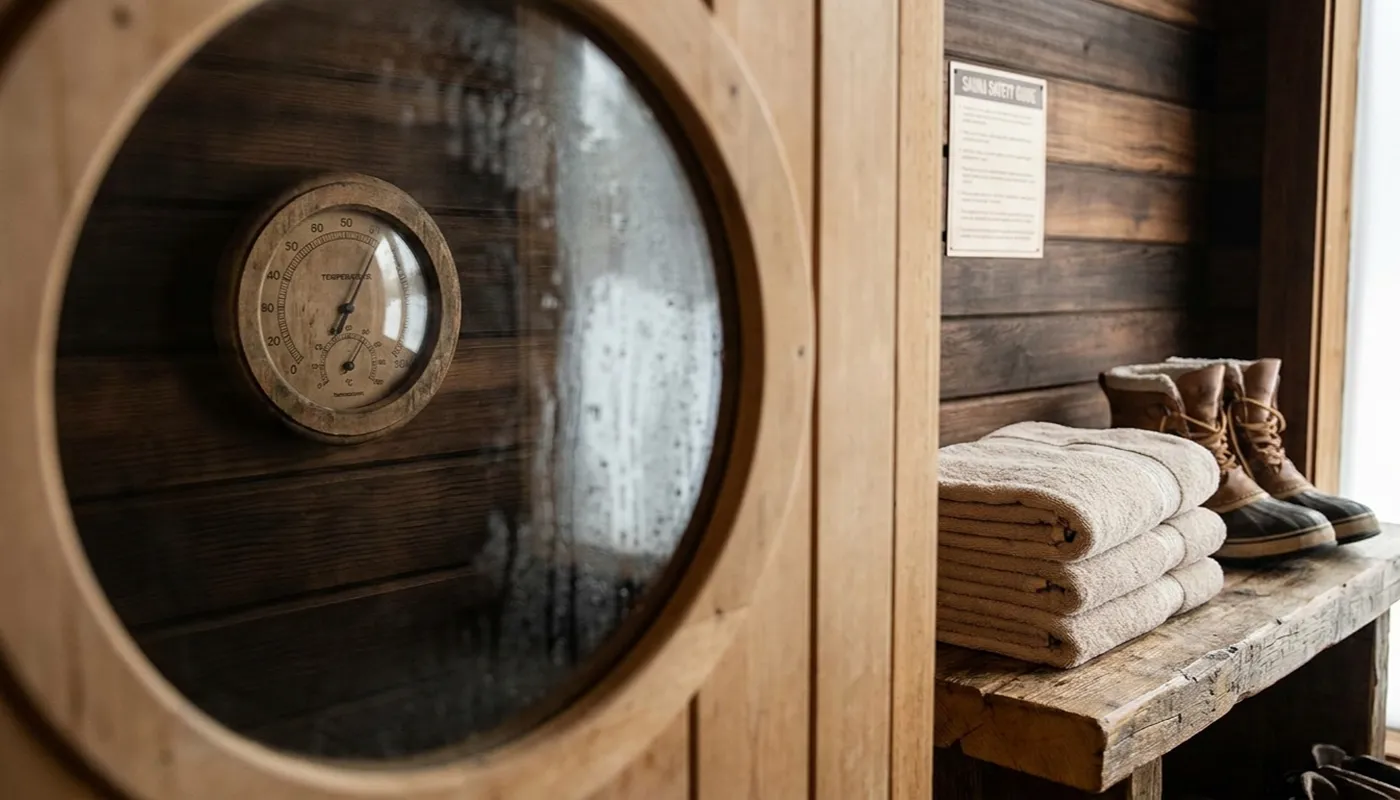
Finally, when treating your portable sauna as an outdoor sauna, you must think of safety. Remember that they were made for indoor conditions. As such, any external electrical wiring might not be protected from the elements.
Obviously, you need electricity to power it, so you need dry power connections. You also need to protect both the sauna and accompanying sauna accessories from the weather.
The surface on which the sauna will be placed also needs to be stable. That is true both indoors and outdoors, but it is still worth mentioning.
Lastly, avoid having your sauna in standing water. It should not be exposed to rain or snow, but also puddles and similar conditions.
FAQ
Can you use a portable sauna in winter?
Yes, portable saunas were designed to be used year-round. However, using it outdoors can affect the sauna’s heating performance.
Does cold weather reduce sauna temperature?
It can. Lower temperatures and wind, in particular, can cause heat loss. Weaker saunas may even struggle to reach advertised temperatures. This happens when they lose heat faster than they can generate it.
Can I put a portable sauna outside?
Many users do, for a variety of reasons. Whether it is lack of space or enjoying the hot and cold contrast, users have tried using portable saunas outdoors. If you plan to do this, make sure to place your sauna in a sheltered location.
Is an infrared sauna better than steam in winter?
Both can work well. Sauna’s performance depends more on insulation and setup conditions. The heating method has little to do with performance.
Is Winter Sauna Use Worth It?
In truth, it is not ideal to use an indoor sauna outdoors. It was designed to be used indoors for a reason, and the design clearly reflects that.
So, why do people do it? Well, many enjoy winter sessions because of the contrast. On one hand, you have hot and steamy inside of the tent, and on the other, the cold weather.
Sauna heat provides comfortable relaxation during the cold days, too. If treated properly, a portable sauna can provide convenient year-round use, even in cold weather.
Using it outside, however, changes the conditions the sauna was meant to be used in. Cold weather may affect its performance, making weaker saunas unable to reach desired temperatures. Even if your sauna is strong enough, it may still need more warm-up time.
You can make it work better by protecting it from the elements. Not only will it make the sauna more efficient, it will also make it safer for you to use. But if you are a fan of the hot and cold contrast, investing in an outdoor sauna might be better.
Alternatively, consider contrast therapy, where you use a portable sauna for ice bath. Ultimately, you might simply have to experiment yourself.
Depending on what model you get, it might perform better in winter conditions than expected. If you don’t yet have a portable sauna, here are some of the best portable sauna tents to consider buying.