

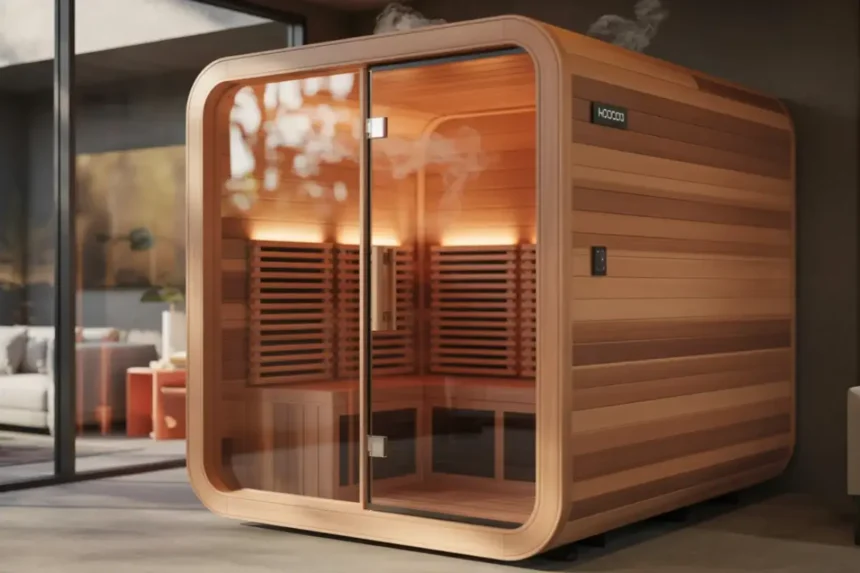
Ever since the pandemic, people around the world have been focusing on changing their habits. The pandemic showed them that some services and activities, including wellness, may not always be available.
This led to the rise of home wellness as an alternative to going to gyms and spas. These days, many are looking to build simple wellness routines at home, which has resulted in the rise in popularity of portable saunas.
- How Does a Portable Sauna Work?
- Types of Portable Saunas Explained
- Portable Sauna Benefits: What Does Science Say?
- Portable Sauna vs. Traditional Sauna
- A Step-by-Step Guide on How To Use a Portable Sauna at Home
- Choose the right location
- Assemble and preheat
- Hydrate before you start your session
- Set the temperature
- Session duration
- Cool down properly
- Clean and store the unit
- How to Use a Portable Sauna Safely
- What to Look for When Buying a Portable Sauna?
- FAQs
- Are portable saunas as effective as traditional saunas?
- How long should you sit in a portable sauna?
- Can you use a portable sauna every day?
- Do portable saunas help with weight loss?
- Are portable infrared saunas safe?
- How much electricity does a portable sauna use?
- Can portable saunas be used outdoors?
- Conclusion
| Quick Answer: A portable sauna is a foldable heat therapy device created for home use. Unlike traditional saunas, it does not require a lot of room, nor permanent installation or a dedicated room. They work by generating heat using infrared panels or steam, which then warms up the body to produce sweat in a small, enclosed space. |
Most portable sauna models fall into one of three main categories: infrared sauna tent, steam sauna tent, and portable sauna blanket.
Each option is slightly different from the others, but all of them ultimately aim to do the same thing, which is to deliver a sauna-style experience in the comfort of your own home.
This guide will explain in detail what is a portable sauna, how it works, and what types there are, as well as how you can choose a portable sauna for home sauna use that will fit your space and needs.
How Does a Portable Sauna Work?
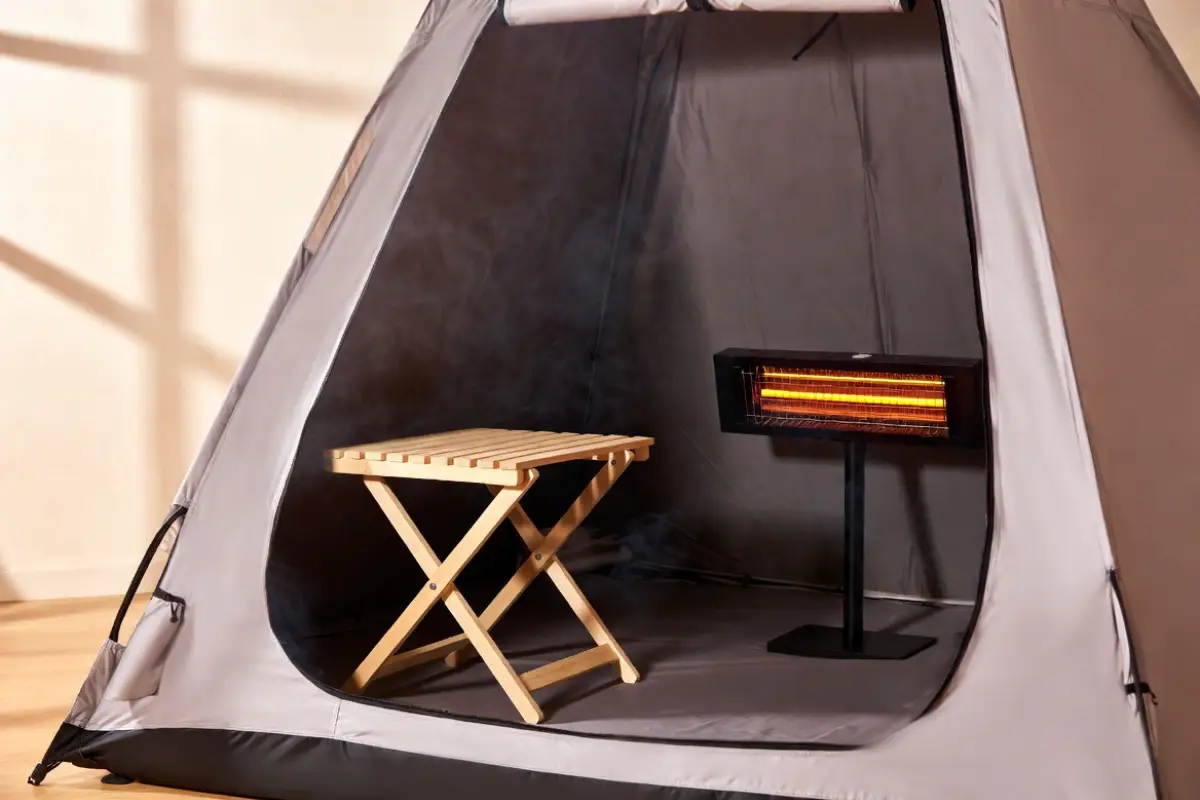
Understanding how portable sauna works is important if you wish to include one in your home wellness routine. The technology behind it is fairly simple to understand when you break it down.
As mentioned earlier, there are different designs and types of portable saunas, but they all follow the same basic idea, which is to generate heat inside a small enclosed space housing the user’s body.
As the tent have heaters to warm up, the body does as well, leading to sweating without needing an entire sauna room.
The Core Mechanism of Portable Saunas
The main purpose of the portable sauna is to generate heat. Depending on the exact type, this can be done in one of two ways: infrared heat or, more traditionally, steam.
Steam-based units contain a small steam generator that boils the water and releases warm vapor inside the tent. That way, a humid environment is created, similar to how traditional steam rooms work, only in a smaller space of the tent.
Infrared models work slightly differently, as they come with special panels that can emit infrared light waves.
The difference is that the light therapy heats the body directly, instead of heating the air that surrounds the body. Because of this, infrared units can operate at lower temperatures and still produce the same effect.
In both types of portable saunas, the body warms up, and it responds in the same way. Its blood vessels start to widen in a process called vasodilation, leading to an increase in circulation, which causes sweating. The body behaves the same way as it does in traditional saunas.
Typical session temperature can vary from 110°F to 150°F (43.3°C to 65.6°C) in infrared saunas, while steam saunas typically achieve temperatures of 110°F to 120°F (43.3°C to 48.9°C).
What Are The Key Components of a Portable Sauna?
One of the biggest benefits of portable saunas is that they are compact and foldable, meaning that they don’t take up too much room. With that said, they do come with a few key components needed to operate them.
The first, of course, is the heating element, which can be infrared panels or a steam generator, depending on what model you use. As the name suggests, this is a component responsible for producing the heat.
The second component is the enclosure, which is usually a foldable tent or a blanket shell that is used to trap the heat. That way, the temperature is stabilized throughout the session.
The third component is what lets you control the heat inside the sauna – typically a control panel, a remote controller, or, with some models, even an app that you can install on your mobile device. This lets you adjust the temperature, the length of the session, and the like.
Lastly, in tent-style models, you will typically also find a floor mat or a foldable chair, which allows you to sit comfortably during the sauna session. This is the fourth and final key component of the sauna.
Types of Portable Saunas Explained
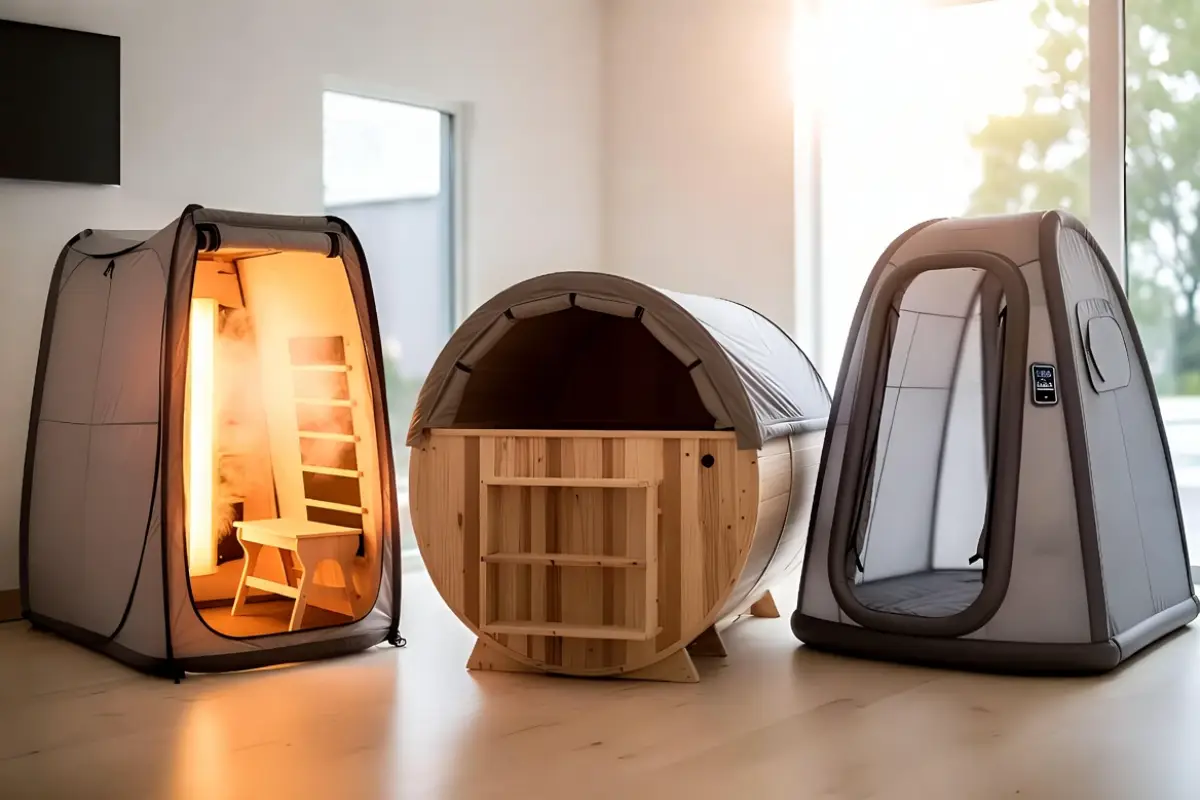
Portable saunas come in multiple designs, but most can be sorted into one of three main categories.
Each type uses a different heating method and offers a different experience, allowing you to choose the one that suits your needs best.
Infrared Sauna Tents/Portable Infrared Saunas
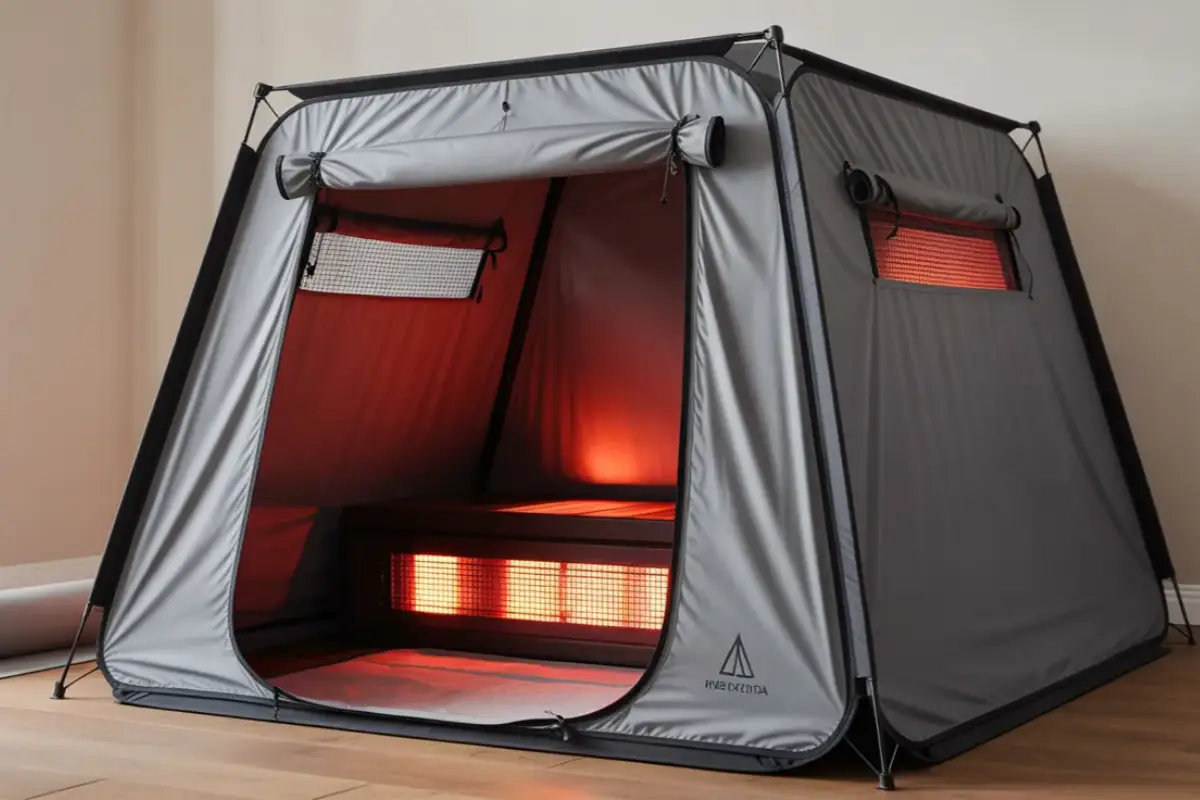
Portable infrared sauna tents are the most common type of portable sauna. They do not heat up the air, but instead use infrared panels that emit light that warms the body.
A lot of models use far-infrared (FIR) heat, since it goes deeper into the body. However, you can also find many models with near-infrared elements, which offer surface-level heat.
Since the heat works directly on the body, far infrared saunas usually operate at lower temperatures while still providing the expected sweat tent experience.
Apart from helping you sweat and cleanse your body and skin, they also enable muscle relaxation and joint comfort, which is a great way to recover after exercise.
In terms of cost, they are most commonly found in a price range between $200 and $600, depending on size and exact features that each model offers.
However, they are quite easy to set up, and you can typically complete the setup within 5-10 minutes.
Pros:
- The operating temperature is lower compared to other types
- Many users find dry heat more comfortable
- Often comes with adjustable heat settings
- Easy setup
Cons:
- More expensive than steam-based sauna tents
- Requires electrical heating panels
Steam Sauna Tents
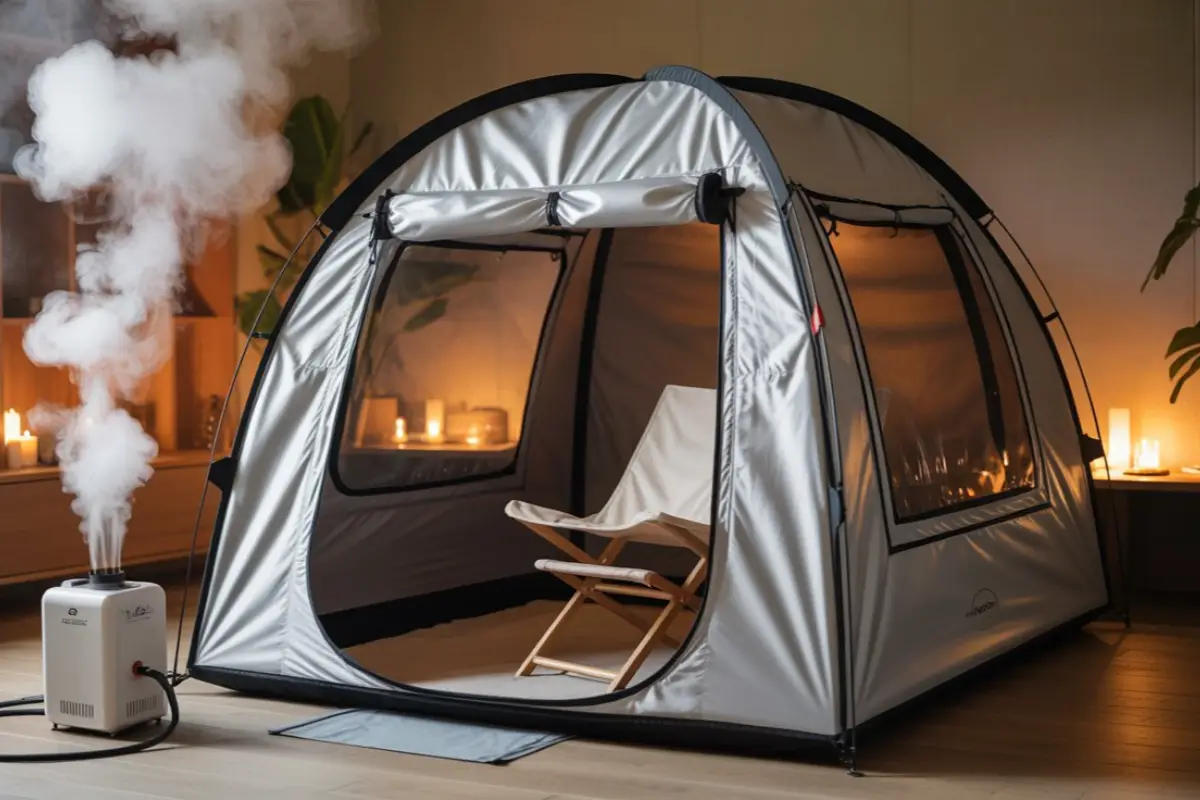
As an alternative to infrared sauna tents, you have a portable steam sauna tent, which acts more like a traditional sauna or a sweat tent. This version has no heat panels; instead, it comes with a generator that sits outside the tent.
After you add water into the system, the generator heats it up and turns it into steam, which is then sent into the tent via a hose that connects the two.
The tent will slowly fill with steam just like a traditional sauna, producing a humid environment and enabling steam therapy. As such, it’s the best type of sauna for those who want a more traditional experience at home.
This type of sauna therapy is beneficial as it opens the airways and hydrates the skin, although it can feel intense for those who are not used to it, even at lower temperatures.
The main benefits of this type of sauna tent include a lower price (roughly between $80 and $250) and stress relief. However, note that the setup may take a bit longer, as the generator takes time to heat up the water and fill the tent with steam.
Other than that, the biggest difference from infrared tents is the environment itself, as steam tents use humidity while infrared saunas offer dry heat.
Pros:
- Cheaper in-home sauna
- Fits small spaces
- Great for those with a small space or budget
- It lets you have a personal sauna at home
Cons:
- Humidity can be intense regardless of heat levels
- Setup takes 10-20 minutes as the water heats up
Sauna Blankets
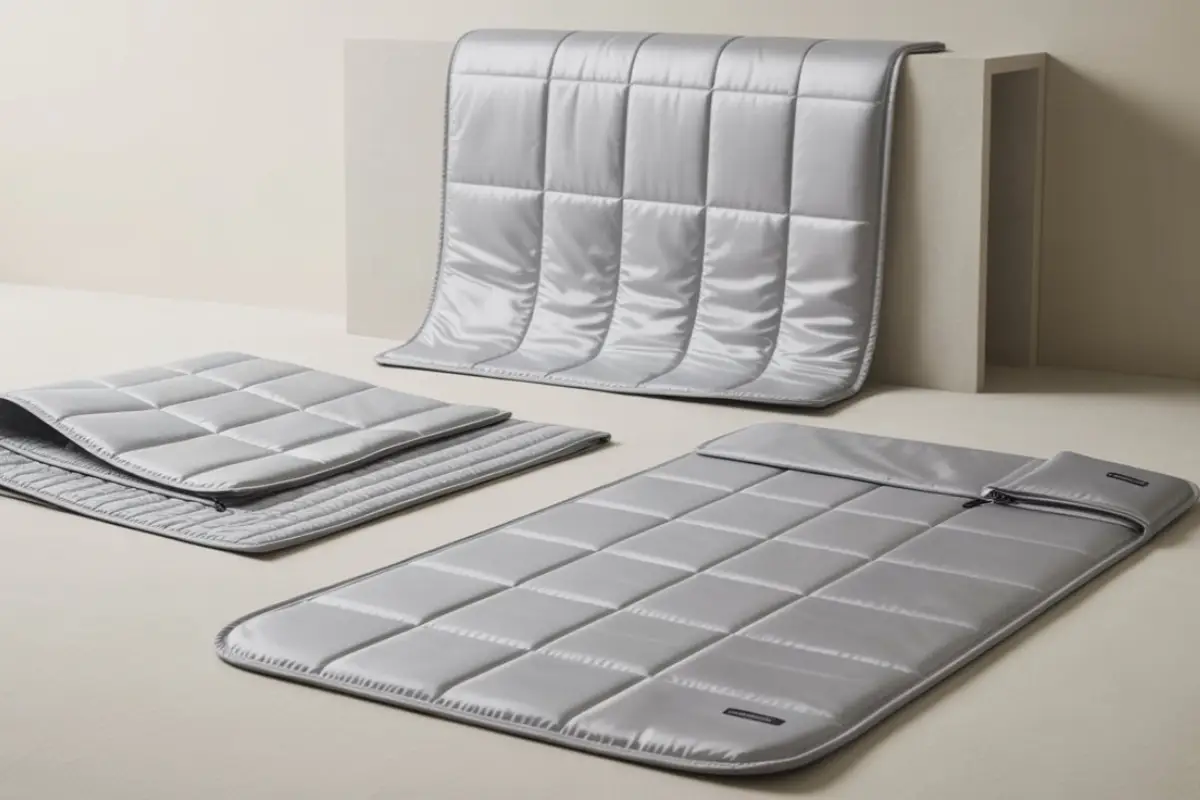
The third option is to get a portable infrared sauna blanket, which is a more compact alternative to a portable sauna tent. Instead of sitting inside an enclosure, you can lie down inside a heated blanket that wraps around your body.
Another difference from the steam tent sauna is that blankets typically use far-infrared heating elements that are embedded inside the material, making them more similar to infrared tents.
They also fold much more easily, making them a good option for those with limited space or those who often travel, but still enjoy a regular sauna experience at the end of the day.
Many sauna blanket models can fit into a carrying bag when on the move, or you can store them in a closet or a drawer when you don’t use them.
As for the price, it can vary quite a bit, going from $100 to $500, depending on materials and heating technology.
On the plus side, setup is pretty quick, only taking 2-5 minutes, since all you need to do is plug in the blanket and it will immediately start warming up.
The only real downside of infrared light therapy via a blanket is that it can feel more restrictive, since the body has to remain wrapped for the duration of the session.
Pros:
- Easy to use, carry, and store
- Cheaper than the infrared tent
- Great for small spaces or travel
- Quick and easy setup
Cons:
- More restrictive than a tent
- It can still get quite expensive, depending on the materials
Comparison Table
| Type | Heat Source | Temp Range | Best For | Avg. Price | Setup Time |
| Infrared Tent | Far/Near IR Panels | 110–150°F | Deep tissue, detox, joint relief | $200–$600 | 5–10 min |
| Steam Tent | Steam Generator | 110–120°F | Respiratory health, skin hydration | $80–$250 | 10–20 min |
| Sauna Blanket | Far Infrared | 95–160°F | Travel, budget, convenience | $100–$500 | 2–5 min |
Portable Sauna Benefits: What Does Science Say?
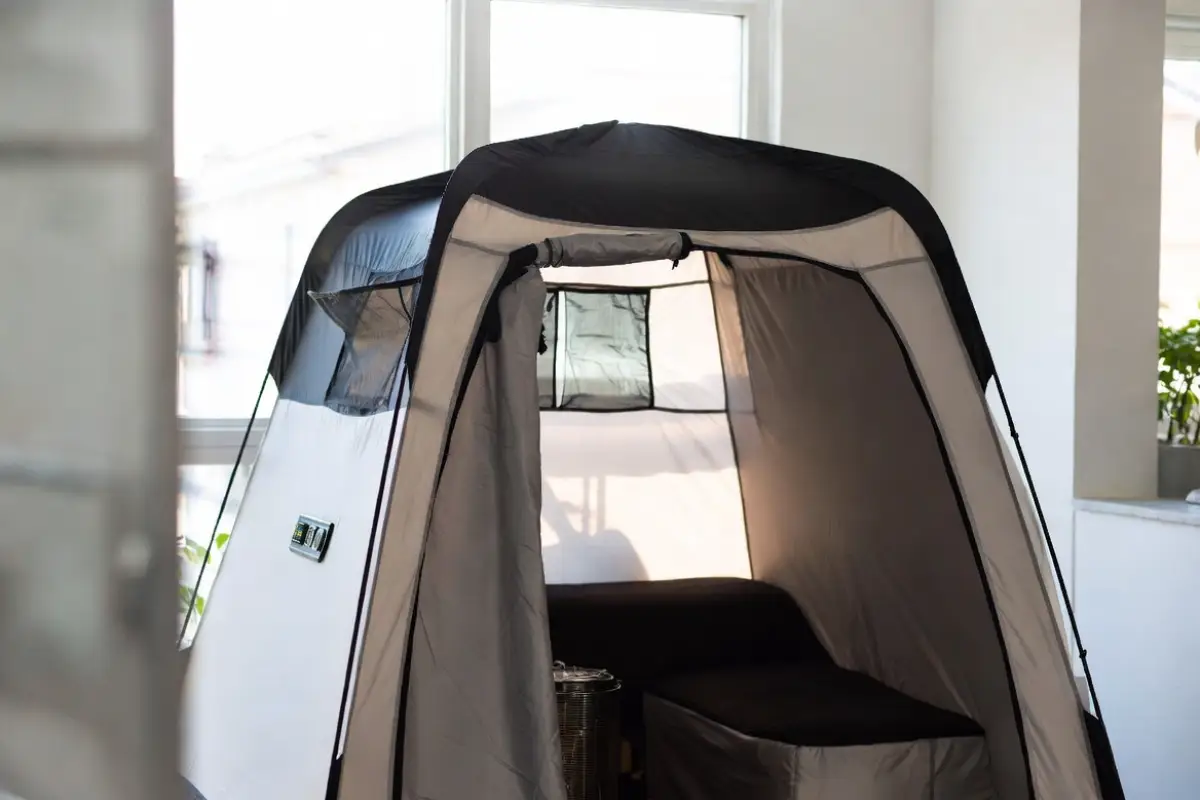
There are a lot of claims being made about the benefits of portable saunas, but not all of them are backed by solid enough evidence.
Fortunately, some effects of heat therapy have been studied extensively.
Even so, if you are planning to get one, you should know what to expect and how to separate realistic benefits from the claims made to suit marketing purposes.
Physical Health Benefits
Among the most common claims about sauna benefits are those tied to the user’s physical health. Regular use has been linked to some health improvements, including better circulation and heart health.
The reason behind the positive effect is that sauna use heats up the body, which results in the expansion of blood vessels and an increase in heart rate. This is similar to what you can experience from light exercise.
If you want a deeper look at how this actually affects circulation over time, we cover it in detail in our guide on sauna use and blood circulation.
In fact, the JAMA Internal Medicine study has found that regular sauna use could lower the risk of cardiovascular-related problems.
Beyond that, heat exposure could also have a positive influence on muscle recovery and pain relief, which is why athletes use saunas after heavy training. This goes back to the increased blood flow, which can reduce stiffness and improve recovery time.
Similarly, sweating also helps with skin health by opening pores and allowing the sweat to remove dirt and oil buildup from the surface of the skin.
Of course, sweating in a sauna is not a replacement for proper skincare, but it can contribute to your overall health and it leaves the skin feeling refreshed.
There is also a study about the effect of sauna sessions on the immune system conducted by the National Institute of Health (NIH). The study suggests that sauna sessions may have a positive influence on white blood cell production.
Finally, there have been many claims that saunas can help with weight loss. While it is true that they can increase heart rate and cause temporary water loss through sweating, they are in no way a substitute for proper diet and exercise.
While some studies did suggest that saunas may cause a mild calorie burn, this effect is quite limited.
Mental & Wellness Benefits
Apart from physical health benefits, sauna sessions can also provide mental and wellness benefits.
For example, regular sessions can help reduce stress thanks to the fact that heat exposure can help lower cortisol levels and cause endorphin release. This combination can help the user feel calmer and more relaxed.
As a direct consequence, you may also experience better sleep quality after a session.
Even those who struggle to sleep could experience a positive change, as a drop in body temperature after a sauna could act as a signal to the body, telling it that it is time to rest.
Finally, stepping into a sauna can also be a simple but powerful lifestyle benefit. Once you close the zipper, you get to slow down and remove distractions such as your phone or laptop.
During the session, you get to relax, think, and just enjoy the quiet time, acting as a digital detoxification.
Detox Claims – What’s Real?
Speaking of “detox,” this is one of the terms most commonly used in conversations about saunas, but it is often misunderstood.
Sweating can help you remove small amounts of certain harmful substances from the body, but that is hardly the most efficient or common way for your body to do so.
The main systems your body uses for removing toxins are still the liver and kidneys, not sweat glands. As such, a sauna can act as a helpful tool in achieving better health overall, but it has its limits.
| Medical Disclaimer: This content is for informational purposes only, and should not be considered medical advice. If you have any health conditions or concerns, consult a qualified healthcare professional before using a portable sauna. |
Portable Sauna vs. Traditional Sauna
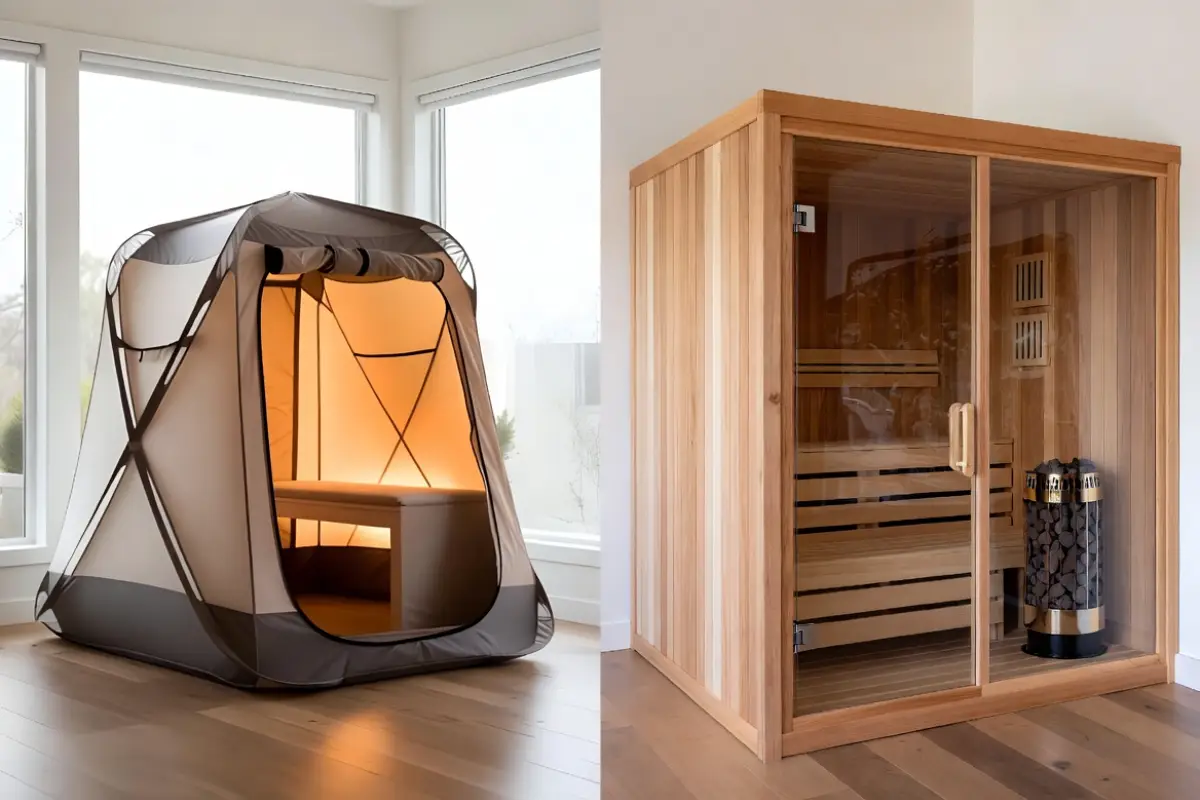
You might be wondering how do portable saunas compare to traditional ones. In truth, both aim to deliver heat therapy, although they do it in somewhat different ways.
Portable saunas were designed for convenience and flexibility. You can set them up pretty much anywhere as long as you have an outlet to plug them in.
It can be in any room, or it can be outdoors, at home or on the go. You can set it up in minutes whenever you need to use it, and when you don’t need it, you can just fold it and store it somewhere.
You don’t need to pay for expensive installations or renovations, and they are far more affordable, making it a cost-effective and practical solution.
For readers on an even tighter budget, we also have a step-by-step guide on how to build your own DIY portable sauna at home.
On the other hand, traditional saunas can provide a more classic and immersive experience. They offer higher temperatures, going up to 200°F, compared to portable ones that are usually between 100°F and 160°F.
The downsides include a much higher price, the need to have an entire dedicated room, professional installation, and regular deep cleaning.
| Feature | Portable Sauna | Traditional Sauna |
| Cost | $100 – $700 | $3,000 – $10,000+ |
| Space Required | Any room, folds away | Dedicated room needed |
| Installation | No install needed | Professional installation |
| Heat Intensity | Mild to moderate | High (up to 200°F) |
| Humidity | Steam: high / IR: dry | Dry or wet options |
| Maintenance | Wipe down, simple | Regular deep cleaning |
| Best For | Renters, beginners, small spaces | Enthusiasts, homeowners |
A Step-by-Step Guide on How To Use a Portable Sauna at Home
Using a portable sauna at home is quite simple, although there are a few small details to pay attention to in order to secure the best experience, as well as comfort and safety. This only includes a few short steps, which will become second nature before long, as you continue to use it.
Choose the right location
Start by choosing the right location for your at-home portable sauna. It needs to be placed on a flat surface, and it must be close to the outlet, since you need to plug it in to use it.
Apart from that, make sure that the area has good ventilation. It would be best to avoid tight corners with limited airflow.
Assemble and preheat
Once you find the right spot, you can set up the sauna, plug it in, and turn on the heat generator.
The time needed for it to be ready for use depends on the model and the type of heating, but in most cases, it will only need 10 to 20 minutes to be ready for use.
Hydrate before you start your session
Don’t forget to hydrate before you start your session, as you will be sweating. Staying hydrated is important as it will reduce the risk of dizziness or dehydration.
You can prepare by drinking at least one or two glasses of water before you jump in.
Set the temperature
Another important step is to set the correct temperature. If you are new to portable saunas, note that they have a thermometer that allows you to select the temperature range.
For beginners, 110-120°F is the best place to start, and then increase the heat as you become more accustomed to it and gain more experience.
If your unit struggles to reach these temperatures, our guide on how to make a portable sauna hotter walks through the most common fixes.
Session duration
As for how long your session should last, beginners should not overdo it.
Around 10 to 15 minutes should be more than enough when you first start, while later on, you can double that time and go for 20 to 30 minutes.
Cool down properly
After your session, the top priority should be to cool down properly. Step out slowly out of the sauna and allow your body to adjust to the outside temperature.
Changing temperatures sharply can be a shock for the body, but you can smooth the transition by taking a lukewarm or cool shower.
After that, rest for a few minutes, and once your body temperature stabilizes, you can move on with your day.
Clean and store the unit
Last, but not least, don’t forget to care for your sauna too, in order to keep it clean and safe for future use. Wipe down the inside of it after each use, especially if you are using a blanket or a tent.
It should also get completely dry before you fold it and store it away. This will prevent odor buildup and extend the unit’s life.
How to Use a Portable Sauna Safely
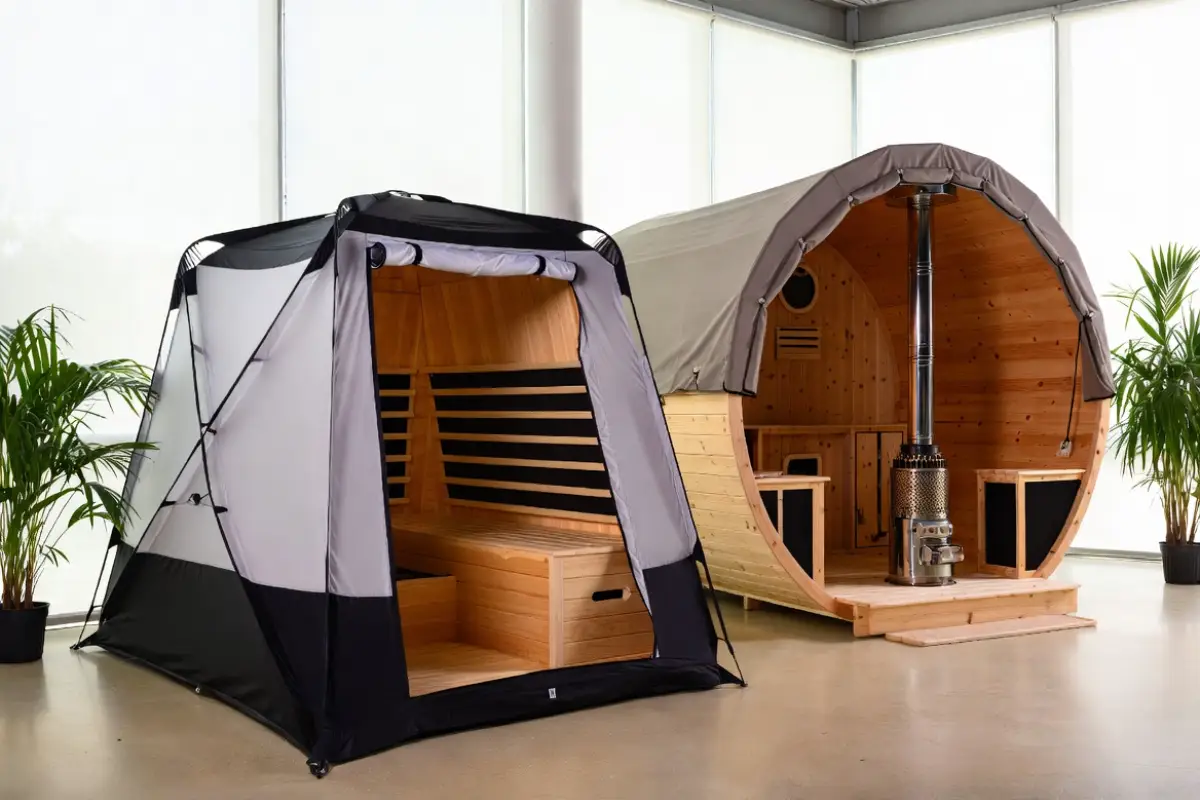
Using a portable sauna is easy and generally safe for most healthy adults. With that said, using one still means exposing your body to heat, so you should still make a couple of checks to ensure total safety.
Small mistakes, such as staying in for too long or skipping hydration, could easily turn what was meant to be a relaxing session into a bad experience.
Here is how you can avoid that.
Who Should Avoid Portable Saunas
To start off, note that some people should be more cautious than others when using a portable sauna, or even avoid it altogether.
Saunas should be avoided during pregnancy, as heat can be difficult for the body to handle, since it puts extra strain.
The same is true for individuals with heart conditions or low blood pressure, for that same reason.
If you are taking medication for a different issue or have an ongoing health issue, it is best not to use saunas – portable or otherwise – until you check with your doctor.
Sauna usage can affect circulation, hydration, and heart rate, so be mindful of these issues to ensure your safety.
Common Mistakes to Avoid
Another thing to keep in mind when using saunas is some common mistakes that might not seem like a big deal, but can be seriously harmful, such as staying in too long.
If you expose your body to the heat more, that doesn’t mean better results. Instead, you are likely to experience dizziness, dehydration, or you might even faint.
Not drinking enough water, or forgetting to drink any, is also a common issue, both before and after saunas. When you use a sauna, you sweat, meaning that the water leaves your body.
You need to enter with a steady supply and replenish it after leaving, to avoid dehydration.
You should also make sure to only use portable saunas in properly ventilated spaces, especially when it comes to steam models. You need proper airflow to keep the environment safe, as well.
Lastly, for infrared units, make sure not to overlook EMF levels. Most modern models are designed to use low EMF, but you should still check and make sure.
How To Have a Safe Session
For most people, especially beginners, 3 to 4 sessions per week is a solid starting point. Daily use may work for some users, but not for everyone, and it is also not necessary to experience benefits.
Also, while sauna sessions are meant to help you relax, make sure to still pay attention to how your body feels.
If you start experiencing some unwanted sensations such as dizziness, nausea, headaches, or your heart starts beating too fast, stop immediately and cool down.
What to Look for When Buying a Portable Sauna?
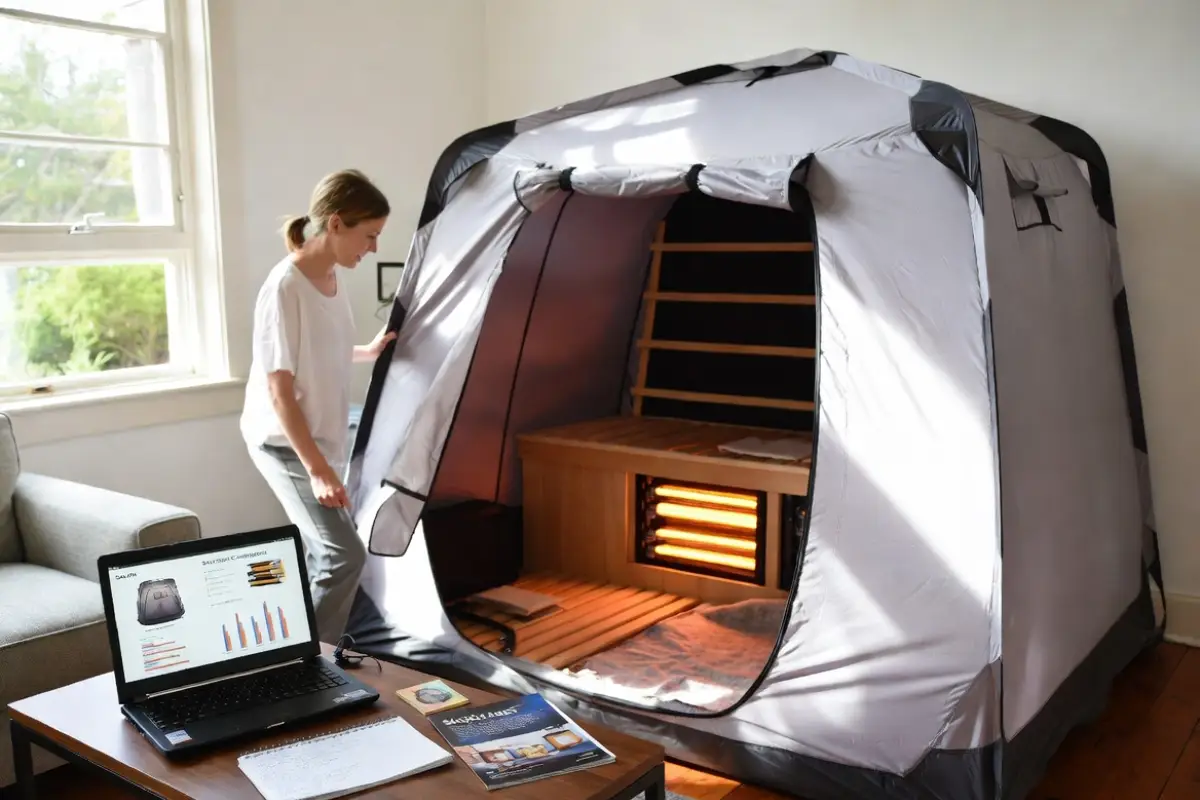
At this point, you are almost ready to get your own portable sauna. The last thing to cover is what to look for when buying one.
When looking for the best portable saunas, start by deciding on the heat type – infrared or steam. As explained earlier, infrared models use panels to heat the body directly, while steam-based saunas heat up the water with an outside generator and send the steam into the tent.
Both work well and achieve the goal, but the experience is different, so you should choose the one that seems more comfortable and enjoyable.
Next, consider size and portability. Some units are smaller and can be folded easily, with a total weight of up to 20kg, while others are larger and heavier.
When picking a model, check the folded dimensions as well, to ensure you have a place to put it when you are not using it.
Another thing to check is the maximum temperature and heating speed. A good unit should be ready for use within 10-20 minutes, and it should be able to keep a stable temperature throughout the session.
However, low-quality models might see temperature fluctuate, which could have a negative impact on your experience.
If you decide to buy an infrared sauna, remember to also pay attention to EMF levels. Better models keep exposure low, so even though they might be more expensive, they are worth the price. Look for units with certification, rather than just those with vague “low EMF” claims.
For a full breakdown of what these numbers mean and how to reduce your exposure, check out our detailed guide on portable sauna EMF levels.
Beyond that, you should also keep material safety in mind. Saunas are made to heat up, and those made with low-quality materials can release odors or worse – chemicals.
Make sure to buy a sauna that uses non-toxic heat-resistant fabrics and those with low VOCS.
When it comes to price, saunas can be budget ($80–$150), mid-range ($200–$400), and Premium ($400+). Ideally, you should go for the top-quality option, as it features improved build quality, low-EMF design, remote control, and other features.
If you want a full price breakdown by type and feature set, our portable sauna cost guide covers what drives the price up or down.
But if you are on a tight budget, you can also find solid options – just make sure to check every aspect thoroughly and buy a safe product.
Lastly, check the warranty and brand reputation. A solid warranty – ideally something long-term or even a lifetime warranty – coupled with positive (and real) user feedback will tell you much more than the ads.
FAQs
Are portable saunas as effective as traditional saunas?
Portable saunas offer a somewhat milder experience, but still provide the same core benefits, including sweating, skin-cleaning, and relaxation. They are more convenient, cheaper, and easier to manage.
How long should you sit in a portable sauna?
If you are a beginner, 10-15 minutes should be more than enough, while more experienced users can double that time and stay in for 20-30 minutes. Ultimately, pay attention to how your body feels, and exit earlier if something feels off.
Can you use a portable sauna every day?
For most people, using a sauna 3-4 times per week is more than enough, as it will achieve the same effect. Daily use can work if you go in for shorter sessions.
Do portable saunas help with weight loss?
For the most part, no. Any weight loss that you may experience will come from the water leaving your body through sweat. Saunas cannot help with fat loss or meaningful detoxification.
Are portable infrared saunas safe?
Yes, assuming that you use them correctly and stay within recommended time limits. However, users with medical conditions or concerns regarding EMF exposure should first consult a doctor before using them.
How much electricity does a portable sauna use?
The amount of electricity depends on the type and model, but most steam models will consume around 1,000W, while infrared units tend to go higher, roughly 1,200W to 1,800W. For reference, that is similar to running a hair dryer for the same amount of time.
Can portable saunas be used outdoors?
Some models can be used outdoors as well, but that only includes those where the manufacturer specified that they are suitable for outdoor use.
Conclusion
Portable saunas are a great way to secure rest, relaxation, and wellness in home conditions. They are a simple and practical way to introduce heat therapy into your daily routine, and rest after a long day at work, or recover after heavy exercise without having to go to the gym, a spa, or pay a small fortune to install a traditional sauna that requires an entire room.
In short, it is a practical and flexible option, and even though it does not quite match the intensity of a full sauna, it can still deliver the same benefits.
This makes it worthwhile for beginners and casual users, as long as they choose the right type and use it properly and consistently.
If you are interested in heat therapy, a portable sauna for home use is easily the most accessible option available. If you are ready to find your perfect portable sauna, browse our top picks.
If you have already tried one, tell us what you thought about it and what type and model you used. Your feedback can help others make a better decision.