


There are many alleged benefits of sauna that are commonly mentioned in marketing. Some were proven to be real; others were debunked as myths. There is also a third category of things that are still being researched. So, when you ask does sauna help you sleep better, this usually falls in the third category.
There are some things that can be concluded based on the information that we know already. A sauna session can raise body temperature and improve cardiovascular health. It also helps the user relax, which is why many choose to use it at the end of the day.
- Does Sauna Help You Sleep?
- Potential Sleep Benefits of Regular Sauna Use
- When Should You Use a Sauna Before Bed?
- How to Use a Sauna as Part of a Better Sleep Routine
- FAQ
- Is it good to sauna before bed?
- Can I use a portable sauna before bed?
- How long before bed should I use a sauna?
- Can a sauna help with insomnia?
- Does sauna make you sleepy?
- Conclusion
After exiting the sauna in a relaxed state, it may be easier for your body to enter deep sleep. Some researchers have suggested that sauna use may be associated with improved sleep. However, individual results can still vary. Furthermore, just because a sauna may help improve sleep, it doesn’t mean it’s a treatment for sleep disorders. It should not be used to replace good sleep habits, nor should the user ignore medical advice because they have a sauna.
Does Sauna Help You Sleep?
The most accurate and direct answer is that sauna may help some people relax and sleep better. As mentioned, a sauna session has a relaxing effect on the body. In fact, relaxing in a sauna is the whole point of its use.
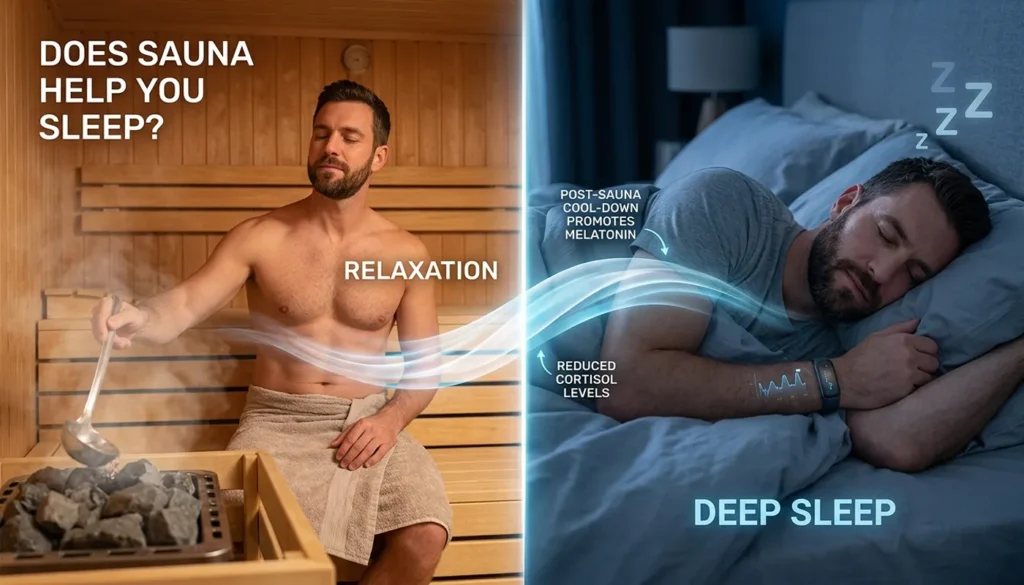
By combining relaxation and heat exposure, the body gets ready to fall asleep. It starts feeling lazy and cozy, so if you go to bed soon after sauna use, you may fall asleep faster. More than that, you may have a deeper and more restorative sleep.
This is because sauna affects the stress hormone cortisol. At first, it raises stress hormones during the session, but then lowers your overall stress baseline. Once you leave the sauna, your body starts to cool down naturally.
This post-sauna cooling period may be what pushes the body towards its normal transition to sleep. Simply put, sauna bathing can impact your body’s sleep signals by creating optimal conditions for your body to release melatonin.
However, note that the evidence, while promising, is not definitive. That means that not everyone will fall asleep faster or experience better sleep. You might not even feel sleepy after a sauna. Ultimately, you will have to try it out yourself and see how you feel. If it does make you feel sleepy or tired, ideally, try to position your future sauna use before bedtime.
Potential Sleep Benefits of Regular Sauna Use
As mentioned, portable saunas may have a different effect on sleep for different users. Some people may already use sauna for better sleep and overall health. Others, however, might use sauna and feel no improvements in sleep quality.
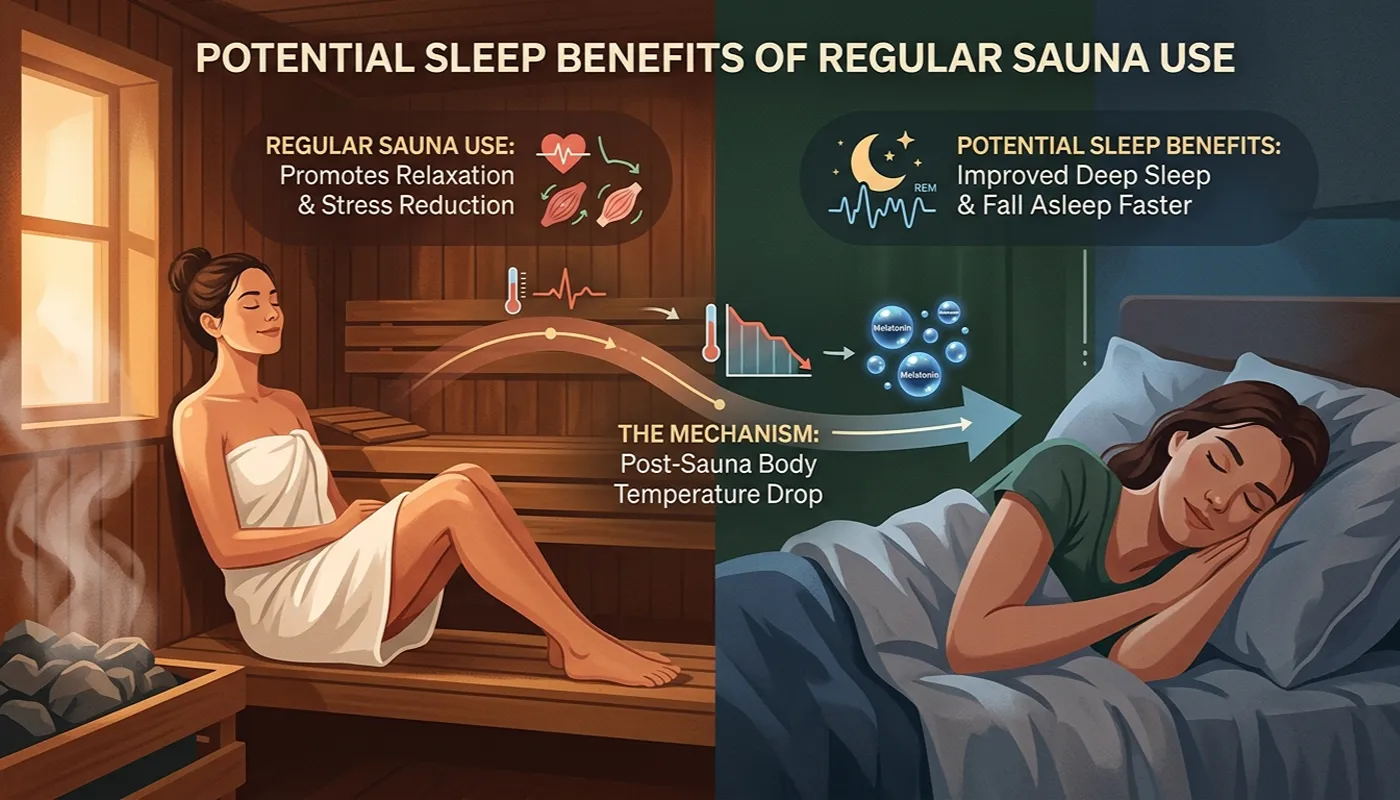
But, assuming that you do experience effects of sauna, what can you expect?
For starters, one of the first and most common benefits people may notice is easier relaxation. A lot of people turn to sauna for relaxation, but for some, it is to achieve restful sleep. Having trouble relaxing before bed is not uncommon. Some people feel tense after a long and hard day, or unable to relax for some other reason.
Sauna is meant to help you relax, and if you use it only a few hours before bedtime, you may still feel the effects when you go to sleep. Something like a true traditional sauna experience can ease the tension. Feeling less physically tense enhances the sleep hormone, which lets you get better sleep.
Sauna also has an unusual impact on how users perceive their sleep quality. Namely, improving sleep quality might be something that depends on your perception of it. If you feel like you had poor sleep, you could feel tired upon waking up. Whereas if you feel like you slept well, you might feel rested, even if nothing else but your perception has changed.
Finally, you can use sauna for better sleep by establishing consistency. In other words, you can spend 20 minutes in the sauna, get cooled, and go to bed. This can help you establish a routine where sauna stimulates sleep.
Again, all of this does not mean that sauna is guaranteed to enhance your sleep efficiency. It also should not be treated as a cure for insomnia. Many researchers have studied sauna’s effect on sleep and so far, sleep metrics vary from user to user.
Note also that a single sauna session is not likely to do much to help you. But, with repeated sauna use before bed, an evening sauna session may eventually impact sleep.
When Should You Use a Sauna Before Bed?
If you intend to use the sauna to enhance sleep, the most important part is the timing. This is because your core body temperature rises during the session. This prepares your body for sleep, as your body temperature naturally increases when sleeping.
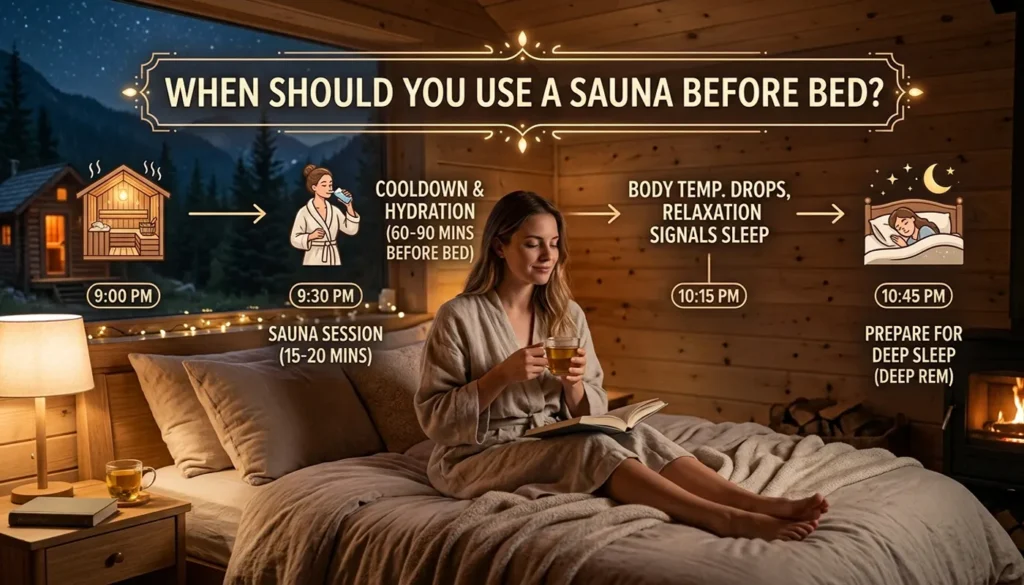
Of course, you still have to follow certain steps. Give the body enough time to go through a temperature drop and for your heart rate to return to normal before bed. Combining sauna and sleep can work, but you should not immediately go from intense heat to sleep.
You will have to do a bit of experimenting when using sauna for sleep. That’s because individual preferences differ. That means that the experience could be different for each person when they use the sauna. There are different types of sauna, but that doesn’t really matter. You can use a portable infrared sauna, also known as a dry sauna, for a gentler experience. For a more traditional experience, you can go for Finnish sauna bathing.
The most important part is to ensure your safety. For beginner sauna bathers, don’t stay in a sauna for too long. Shorter sessions in the sauna might be more appropriate. They are still enough to experience various health benefits, and eventually transition into sleep.
And, of course, remember to hydrate before and after sauna usage, and before sleep time. You need to hydrate before sauna to give your body a supply of water to use for sweating. Then, after the session, you should rehydrate to replenish any missing water from your body.
How to Use a Sauna as Part of a Better Sleep Routine
For sauna users who want to improve their sleep, all that takes is a bit of discipline. The top priority is safety, so keep your sessions moderate. Other than that, you need consistency. Regular sauna sessions before bed can shorten your sleep onset time.
Of course, this will also lead to other portable sauna benefits.
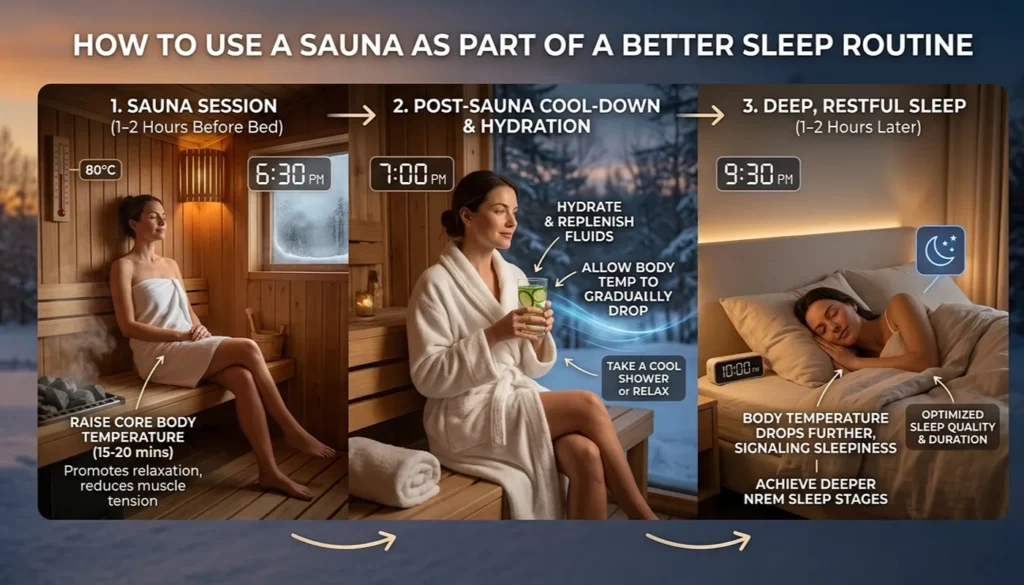
Regular sauna use also adds to sleep hygiene, and it helps reset your circadian rhythm, signaling to your body that it is time to wind down. This makes it easier to fall asleep and stay asleep; it ensures better sleep quality, and it can increase deep sleep stages.
However, before going to bed, you should allow your body some time to cool down. Your core temperature will start returning to normal as soon as you exit the sauna.
Still, you should not rush from extreme heat into bed. While you wait, make sure that you rehydrate to make up for any lost fluids.
Another important thing to remember is to avoid alcohol before sauna use. Alcohol dehydrates your body, and sauna will push dehydration further. This could lead to undesired side effects, like headaches, lightheadedness, dizziness, and more. In the end, for the most part, just listen to your body, and drink water when you feel thirsty.
Avoid these negative effects with simple hydration. Beyond that, you should combine sauna use with other good sleep habits. For example, keep your bedroom cool, dark, and quiet. That way, nothing will disrupt sleep, especially during deep sleep phases.
Finally, remember that sauna use should only complement a healthy sleep routine. It is not meant to replace it. It can help release the natural sleep hormone and aid in achieving deeper sleep, but it is not a cure for insomnia.
FAQ
Is it good to sauna before bed?
For some users, an evening sauna session can help them relax and may support better sleep. However, this is not a guaranteed effect. If you decide to try it out, remember to hydrate and give yourself enough time to cool down after a session.
Can I use a portable sauna before bed?
Yes, portable saunas let you enjoy a sauna session in the comfort of your home. They are less intense than a traditional sauna from Finland, which may benefit beginners.
How long before bed should I use a sauna?
There is no single ideal timing for everyone. As discussed in this guide, even the effects of sauna before bed are not the same for everyone. Ideally, leave enough time to cool off and rehydrate after use. Then, head to bed when you feel that your body is back to normal.
Can a sauna help with insomnia?
Sauna use supports relaxation and, to some extent, it may aid sleep quality. But, there is no evidence to suggest that it can treat insomnia.
Does sauna make you sleepy?
Often, yes. This happens due to a combination of heat exposure, relaxation, and the body’s cooling process that comes after sauna use. For some users, this combination may cause the body to feel tired and sleepy. However, global sauna survey research suggests that responses vary. Some users may even feel more alert after heat exposure, so there is no guarantee.
Conclusion
So, does sauna help you sleep? The answer is both yes and no. Yes, using a sauna can aid in preparing your body for sleep. It helps you relax and unwind, which is a state that the body should be in before bed. It can even help you establish a routine and condition your body to expect sleep after a sauna session.
However, saunas cannot cure insomnia, and they do not have the same effect on everyone. While they may make some users feel sleepy and ready for bed, others might not feel the same.
Some athletes even prefer to use a sauna before exercising, which wouldn’t be the case if saunas made everyone sleepy and tired. This is important to remember in order to have realistic expectations if you decide to use it.
Mainly, do not expect a sauna to be a cure if you are having trouble sleeping. Also, remember to prioritize safety. Respect session and temperature limits, hydrate appropriately, and cool off after use.
So, if you wish to try out sauna sessions before bed and see how they affect you, consider getting a portable sauna.
Their biggest advantage is that they are affordable and allow you to have a session in the comfort of your home. Check out our guide on the best portable sauna tents to find the right one to use before bed.