


If you are new to the world of saunas and steam rooms, you might think of the two as synonyms. After all, they are often grouped together as they share a lot of similarities. But they are different enough to provide very different experiences. When comparing a steam room vs sauna, the biggest difference is the heat source. However, the two also differ in temperature, humidity, and several other things.
Each option has its own advantages, so neither is inherently better than the other. Deciding which one to use or purchase depends mainly on personal preference.
- What Is a Steam Room?
- What Is a Sauna?
- Steam Room vs Sauna: Key Differences
- Potential Benefits of Steam Rooms and Saunas
- Which Option Is Better for Your Home?
- FAQ
- Is a steam room hotter than a sauna?
- Steam room vs sauna: which is better?
- Does a steam room use more electricity than a sauna?
- Can I have a steam room or a sauna at home?
- How to Choose Between a Steam Room and a Sauna?
Other than that, budget, available space, and your plans for using them might also play a role.
In this guide, we will compare steam rooms and saunas across the most important categories. By the end, you will understand what makes them different and will be able to decide which one is best for you.
What Is a Steam Room?
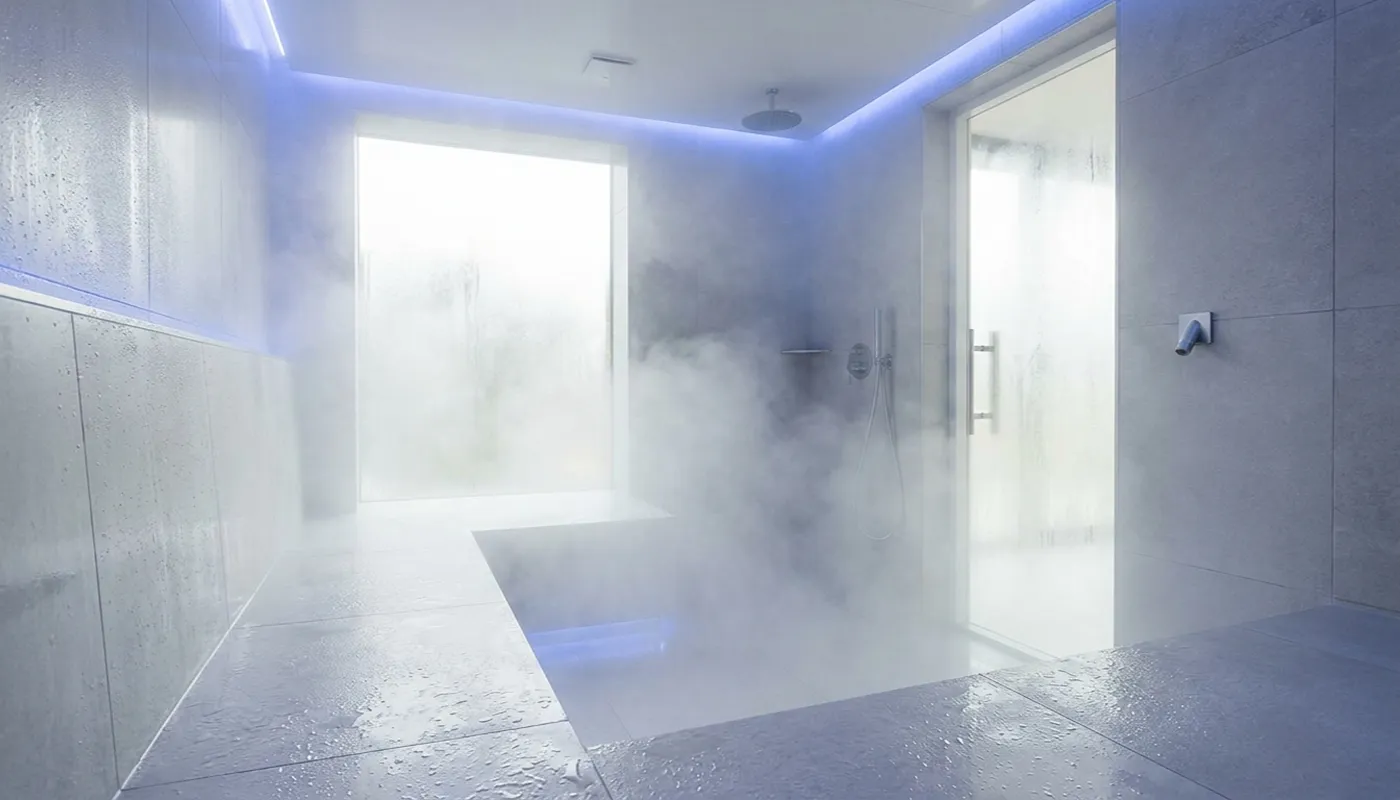
By definition, a steam room is an enclosed, airtight space filled with moist, humid air. The humidity of the steam room comes from a device used to boil water.
The result is 100% humidity, meaning that the steam room uses moist heat to warm up the user. Thanks to high humidity, you often do not require high temperatures.
Steam room temperatures often only go up to around 110°F to 120°F.
This is enough to get the health benefits, assuming that you engage in regular steam room sessions. Research on steam rooms is still largely inconclusive when it comes to what the real long-term benefits are.
They can affect different people in different ways. This makes it difficult to draw definitive conclusions.
Still, experts have found that humid air is deeply relaxing and can aid muscle recovery. It can also affect heart rate and blood pressure.
With that said, the effects are typically only temporary and they end once you leave the enclosure.
As soon as you are out of the vapor, your body starts to cool. Without the need to keep cooling itself through sweating, your heart rate and blood pressure will soon return to normal.
What Is a Sauna?

On the other hand, a sauna is a wood-lined room heated by a stove or hot rocks. Traditionally, a sauna creates a dry heat environment with low humidity.
Its humidity only goes up to 10%-20%, while the temperature is much higher, going from 150°F to 195°F, as per the North American Sauna Society.
The best-known is the traditional Finnish sauna. Another well-known example is the infrared sauna, named after its infrared panels.
Essentially, the panels emit dry heat that targets the user’s body directly. Both types keep the humidity levels low, while the heat is dry and gentler.
Because of this, it can be higher without the experience being too overwhelming for the user.
The third type is the portable sauna. As the name suggests, this is a portable model that can be set up when you need it, and folded and stored away when you don’t.
This is also an example of a device that can be a bit confusing when it comes to categorization.
For example, a portable steam sauna is functionally a steam room, rather than a traditional dry sauna. But it is commonly referred to as a sauna.
Meanwhile, a portable infrared sauna is a dry sauna. It is commonly used for relaxation and rejuvenation in a home environment.
Steam Room vs Sauna: Key Differences
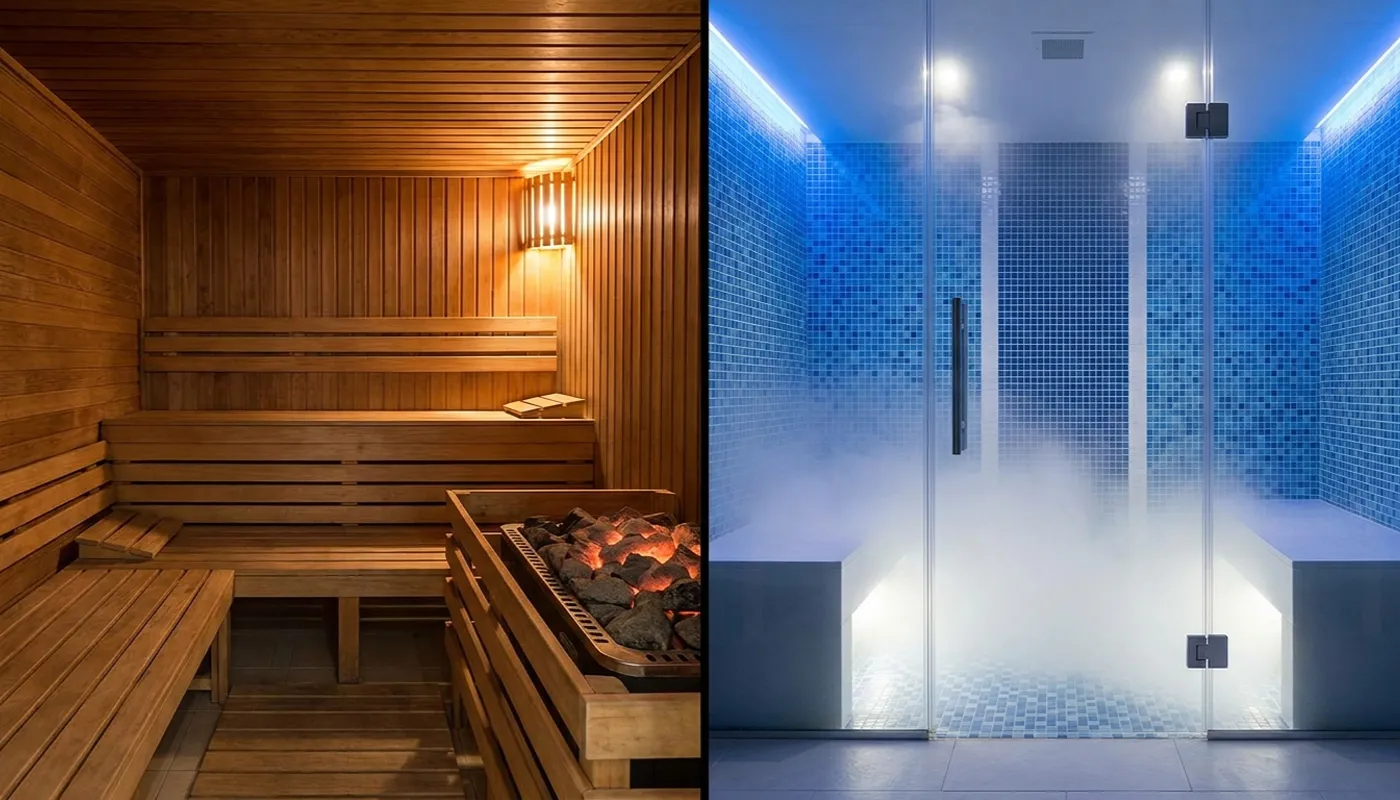
If you are having trouble differentiating between a sauna and a steam room, knowing their differences might help. Remember that the main differences between the two are temperature and humidity.
A sauna produces hotter temperatures, between 150 and 195 degrees Fahrenheit. Meanwhile, its humidity remains low.
It is produced by sprinkling water on hot rocks to create some water vapor. However, the levels stay around 10% if no water is added.
On the other hand, the temperature of a steam room is lower, usually between 110°F and 120°F.
But when it comes to humidity, it goes up to 100%. This is why steam rooms feel a lot hotter, even though they aren’t.
They are just more intense due to all the vapor, making the user experience feel different. It all comes down to a personal preference – if you prefer dry heat or intense steam.
Potential Benefits of Steam Rooms and Saunas

Knowing this, you can use either a sauna or steam room for the same purpose – sweating. Regular sauna use will affect your cardiovascular health, reduce stress, help you unwind, and more.
Both are good for skin health and recovery post-workout, relieving soreness and helping muscles relax. In the end, neither option is objectively better; they just use different methods.
As mentioned earlier, many of the benefits of sauna or steam room are still not fully established. They are considered potential benefits because heat therapy doesn’t affect everyone the same.
Some people have reported health improvement, better sleep, and physical and mental relaxation. For others, many of the effects did not happen.
This can either suggest that sauna doesn’t affect everyone the same, or that many of the positive effects come from the user, not the sauna. With no reliable way to establish which is the truth, the exact health claims remain mixed.
At the end of the day, spending time in a sauna or a steam room can be helpful. To what extent – it remains unclear.
But the point is that, for healthy adults, it is not harmful. If nothing else, frequent sauna bathing can simply be a part of your wellness routine. Something to do to unwind, rejuvenate, and reduce stress and soreness.
It might be best to go in not expecting any particular benefits, other than relaxation and recovery. After all, sauna sessions do not take too much time.
A 15-minute steam shower is enough for physiological and psychological science-backed benefits.
Which Option Is Better for Your Home?

Since neither is better than the other, the answer to which is better lies with each user. That means you have to make some practical considerations when making your choice.
Think about your budget and available space, and whether you prefer low or high humidity. Beyond that, consider whether you like a portable or a traditional, permanent setup.
Note that a permanent steam room or sauna will cost a lot more. The combination of materials, electrical installations, and the cost of work often amounts to thousands of dollars.
In comparison, a portable option will only cost a few hundred. Portable saunas also don’t take up too much room, and you can always fold them and store them away after use. The downside, however, is that they don’t offer a lot of room and are usually weaker.
But while they do operate at lower temperatures, they can still make you sweat. They just won’t be as strong and as intense as traditional models.
A traditional steam room might feel hotter, but it is expensive and permanent. So, make sure to carefully consider what you want and what you can afford.
FAQ
Is a steam room hotter than a sauna?
No, steam rooms typically operate at lower temperatures with higher humidity. However, because of this, they can feel more intense. Saunas tend to have much higher temperatures, but their humidity is much lower, causing you to experience dry heat.
Steam room vs sauna: which is better?
Neither is universally better than the other. The choice is individual, as each user has their own preferences. If you prefer humid over dry heat, you will prefer a steam room over a sauna, and vice versa. Beyond that, it also depends on your budget and the type of experience you are looking for.
Does a steam room use more electricity than a sauna?
First, note that you can use both without electricity if you replace electrical heaters and infrared panels with a wood-burning stove. If you do use an electrical heat source, then energy usage depends on various factors. The size, heating system, insulation, session length, and similar aspects decide how much power you will spend. The same factors also make it impossible to say whether one uses more electricity than the other.
Can I have a steam room or a sauna at home?
Yes, you can install a traditional home sauna or steam room. Alternatively, you can get a portable model that has both advantages and flaws over traditional options. They are more affordable, portable, foldable, and come with fewer and lower running costs. The downside is that they provide a weaker experience.
How to Choose Between a Steam Room and a Sauna?
So, how to choose between a steam room vs sauna? The answer is simple – follow your preferences. This is the most important aspect – what you actually prefer.
Apart from that, there are technical considerations, such as available space and your budget. At the end of the day, your options will be a portable solution or a permanent installation.
Portable models allow you to move them around, store them away when you don’t need them, and buy them at low prices. Traditional models require permanent installation, which means large investments.
They also require a dedicated room or a backyard for a barrel sauna or a cabin.
Ultimately, all versions, types, and models will do the job they were designed to do – make you sweat. It all comes down to your preference and circumstances to decide which one to pick.
With portable saunas growing in popularity, many new users choose them. They are good for testing since they are affordable and you don’t have to give up a whole room for conversion.
If you end up not liking them, you will have only lost a few hundred dollars, rather than thousands. If you decide to give portable saunas a go, check out our guide on the best portable saunas under $200.